
Last updated October 17, 2026
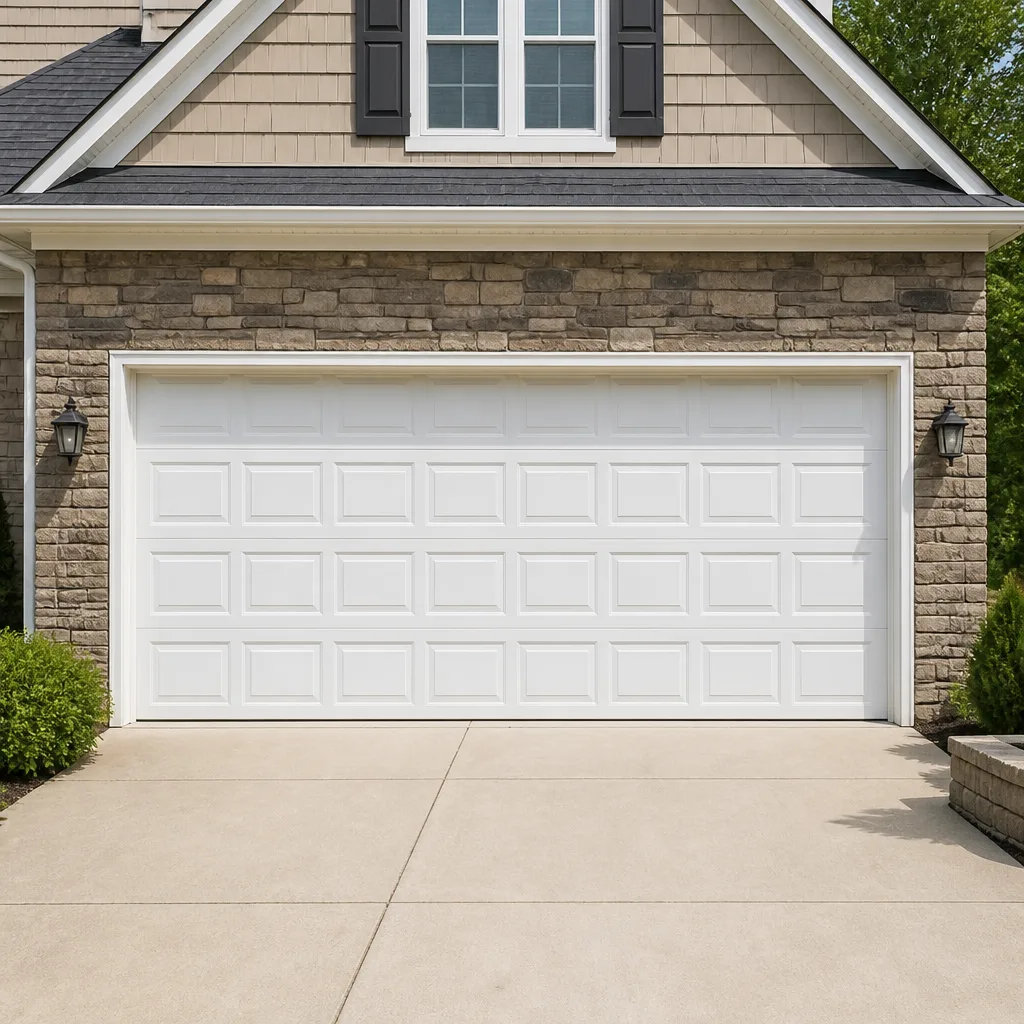 Raised-panel steel
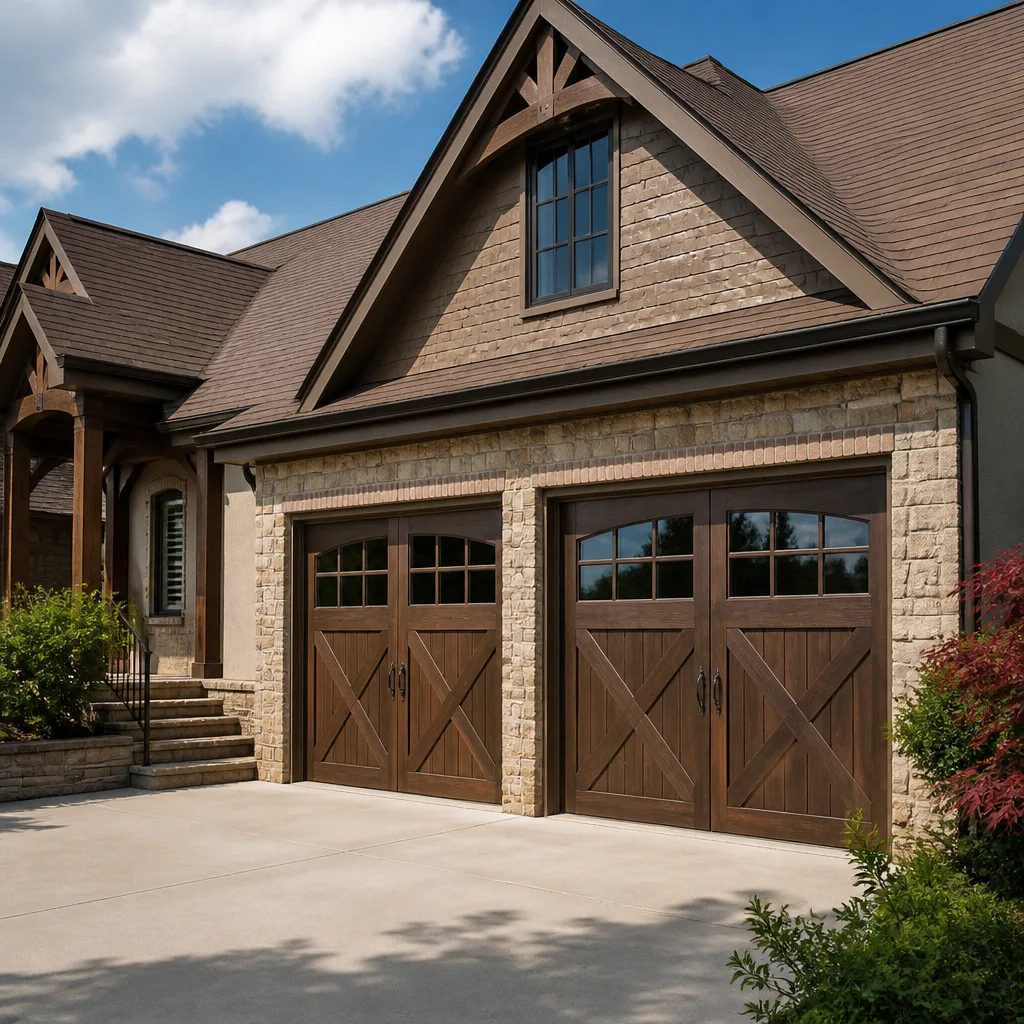 Carriage house
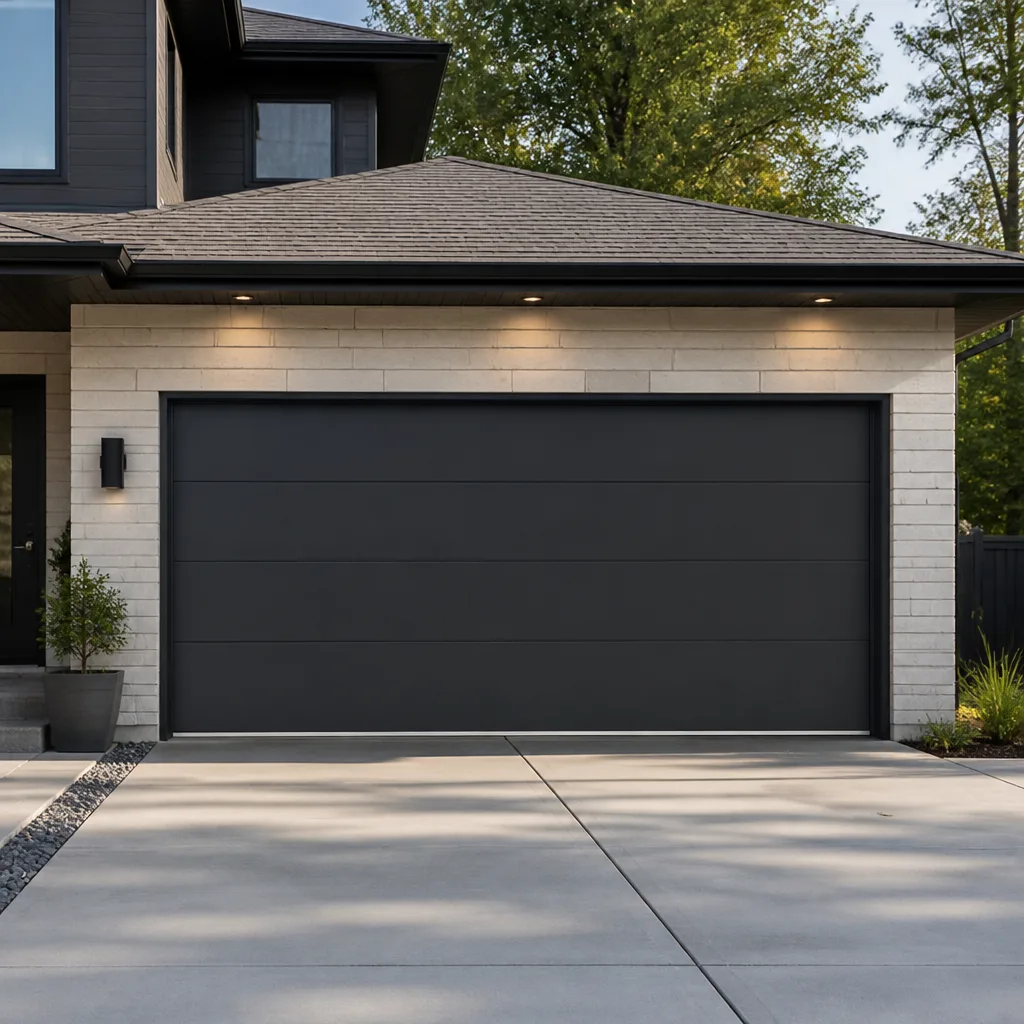 Modern flush
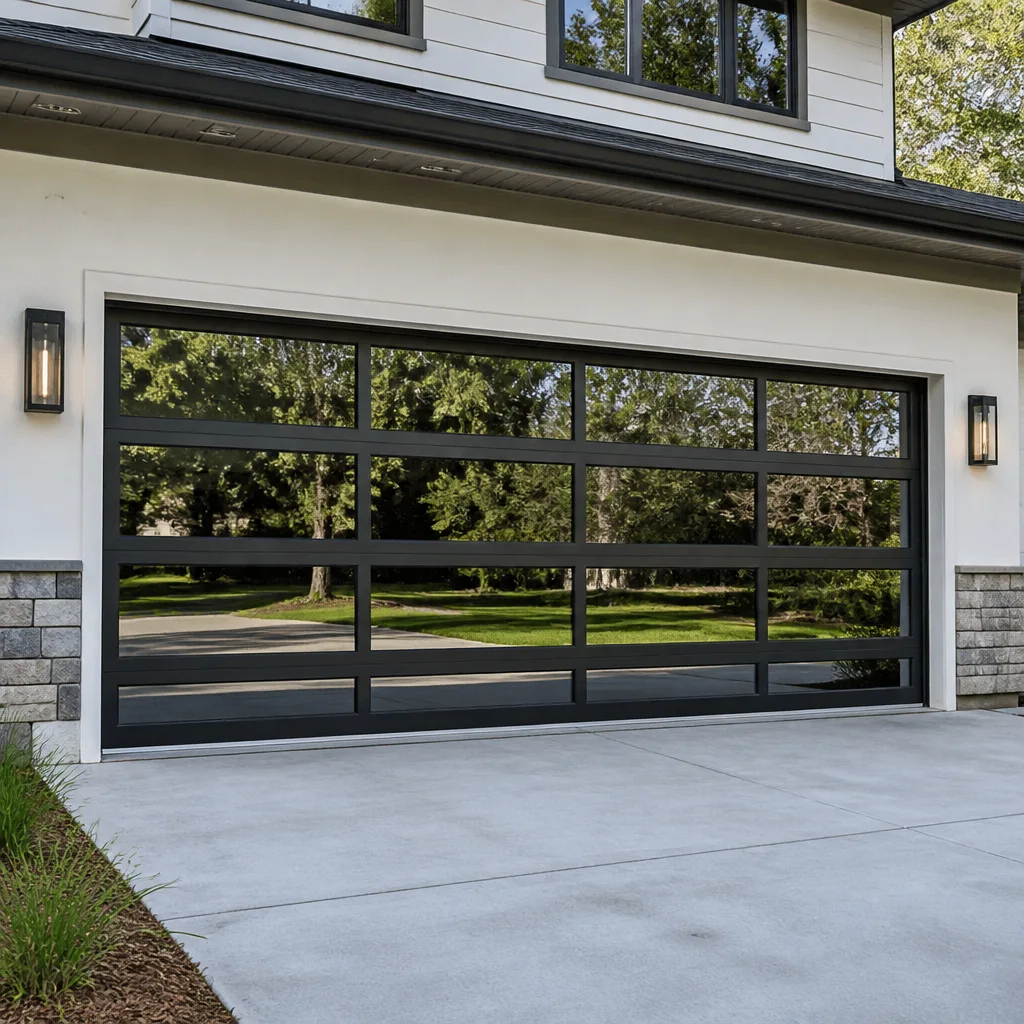 Full-view glass
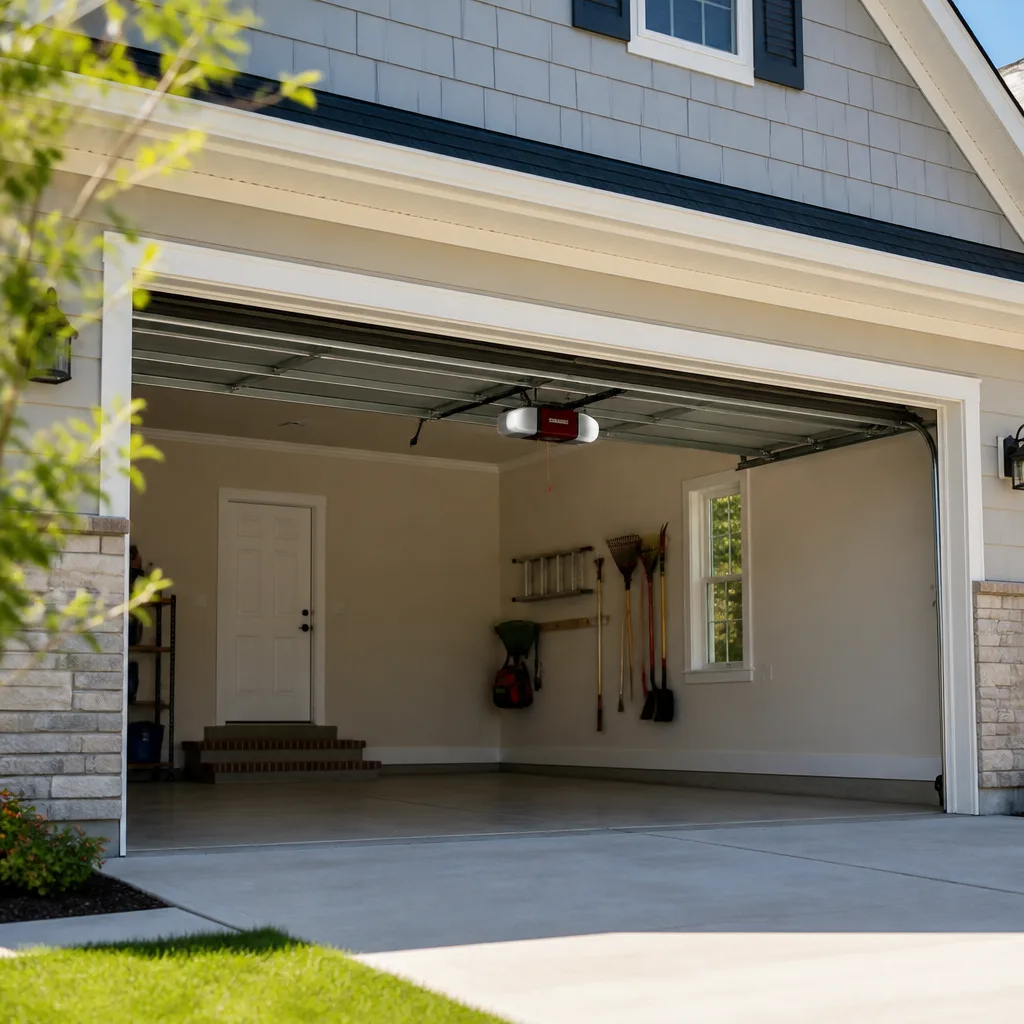 LiftMaster openers
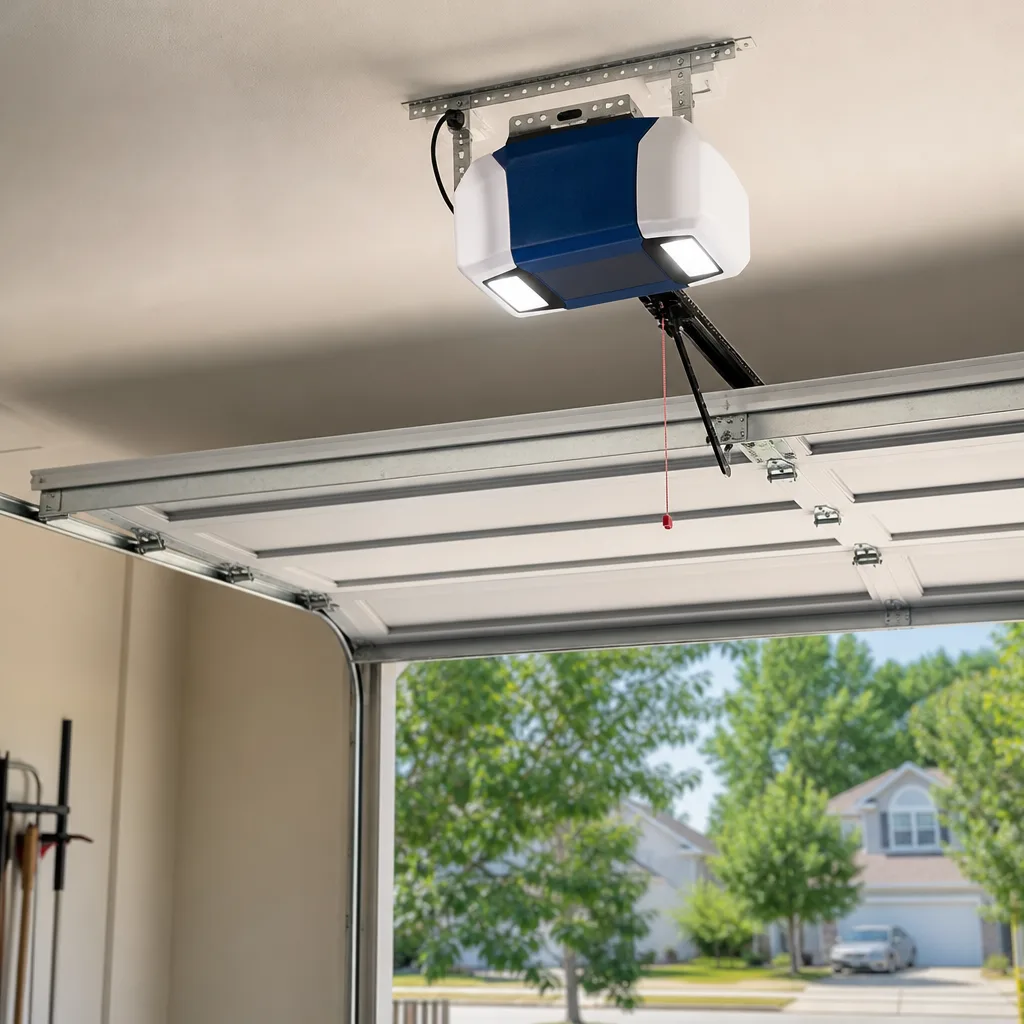 Chamberlain openers
Full 25-point door and opener safety check with every visit - springs, cables, rollers, tracks, and your LiftMaster or Chamberlain opener included
You get a price before we start. It does not change when the truck arrives.
Get your free estimateGarage Door Warning Signs: A Orange County Homeowner’s Reference Guide
A garage door that reverses for no apparent reason isn’t malfunctioning randomly. In our experience across Orange County, it’s almost always one of three specific causes: misaligned safety sensors, a travel limit setting that drifted out of adjustment, or something as simple as a leaf or cobweb breaking the sensor beam. Two of those fixes take less than five minutes and require no tools. This guide walks through every sound, visual cue, and movement irregularity a door can produce, so you can tell the difference between a door that needs a quick adjustment and one that needs a technician before it leaves a car trapped inside or a family locked out at night.
Quick Answer
Garage door warning signs fall into four categories: sounds (grinding, squealing, popping, rattling, scraping), visual wear (frayed cables, cracked rollers, bent tracks), movement irregularities (uneven closing, hesitation, unwanted reversing), and age-related fatigue (rust, corrosion, dried lubrication). In Orange County specifically, sun exposure and coastal salt air accelerate roller and cable wear faster than inland climates, so a door that looks okay from the driveway often hides deterioration visible only from inside the garage.
Styles & brands we work with
Table of Contents
- The Sound-by-Sound Breakdown: What Your Door Is Telling You
- The Seven-Point Visual Inspection Circuit
- Speed and Balance Signals: Reading Spring Tension and Sensor Alignment
- Stop Today vs. Monitor for 30 Days: A Plain-Language Classification
- How Orange County’s Climate Creates Warning Signs You Won’t Read About Elsewhere
- Adjustments You Can Safely Make in Five Minutes (No Tools Required)
- When to Call a Professional
The Sound-by-Sound Breakdown: What Your Door Is Telling You
Garage doors talk. Most Orange County homeowners have learned to tune out the daily grind-and-clunk of the opener cycle, but each distinct sound maps to a specific component with a specific job. Learning the vocabulary means catching a failing part while it’s still a $40 fix instead of a $400 one. Here is what each sound means, in plain terms, based on what we see in garages from Anaheim Hills to San Clemente.
Grinding
Grinding is almost always metal-on-metal contact. The two most common culprits are the rollers (the small wheels that ride inside the vertical and horizontal tracks) or the opener’s internal gears. Rollers are designed to spin freely; when their internal ball bearings wear out, the wheel stops spinning and starts sliding against the track, producing a grinding, crunching sound. The opener’s drive gear, typically made of plastic on LiftMaster and Chamberlain units, strips over time and grinds while the motor runs. Grinding means friction, and friction means heat, and heat accelerates every other component’s wear. This is a monitor-for-a-week sound, not a stop-today sound, unless it’s accompanied by visible metal shavings on the track.
Squealing
Squealing is the sound of vibration at a contact point that has lost its lubrication or its clearance. Most often it’s the rollers again, but this time the nylon wheel surface itself, not the bearing. Nylon rollers dry out, develop flat spots, and squeal against the track. Older metal rollers squeal when the axle pin has worn an oval into the roller bore. Less commonly, squealing comes from the torsion spring itself when it shifts slightly on the shaft and rubs against its mounting bracket. A quick diagnostic: have someone operate the door while you stand inside the garage. If the squeal is loudest at the roller brackets, it’s rollers. If it’s centered over the door, it’s the spring area. Squealing that responds to lubrication is cosmetic; squealing that persists means the component is done.
Popping
A single sharp pop during operation is the sound of a torsion spring momentarily binding and releasing as it coils and uncoils. Springs are under enormous tension, typically 150 to 250 pounds of torque depending on door weight. When a spring binds against itself or its mounting cone, it releases that friction suddenly, producing the pop. Occasional popping is common in newer springs as they settle. Repeated popping, especially on a door older than seven years, means the spring’s internal coils are rubbing and the spring is nearing the end of its service life. We do not recommend opening the spring housing to look. The tension in a properly adjusted torsion spring can break a broomstick or a wrist. This sound is a call-us signal, not a DIY one.
Rattling
Rattling is looseness. Bolts and nuts hold the track brackets, hinges, and opener rail together. Over hundreds of cycles, they back off a quarter-turn at a time, and the door starts to chatter as it moves. The fix is almost always tightening hardware, but the diagnosis matters: rattling that stays constant for years without tightening eventually wallows out the bolt holes in the track brackets, and then the track itself can shift enough to bind the door. In coastal Orange County cities like Newport Beach and Huntington Beach, where salt air accelerates corrosion, a rattling door is sometimes a corroded hinge pin or a rusted bolt that will snap before it tightens.
Scraping
Scraping is the most diagnostic of all garage door sounds because it usually localizes the problem. A scrape during the first few inches of opening means the bottom seal is dragging on the threshold or the door has shifted slightly in its tracks. A scrape only at the midpoint of travel means the horizontal track is bent or the door sections are binding where the curve transitions from vertical to horizontal. A constant scrape through the entire cycle means a roller has seized and is carving a groove into the track. Run the door once and hold a broom handle lightly against the track while it moves; you’ll feel the scrape as a vibration on the specific section where the problem lives.
What the Sounds Mean for a Orange County Home
In our service area across Orange County, the most common sound complaint we answer is grinding on doors that face west into afternoon sun. The heat on the door exterior transfers through the panels and dries out the roller lubrication faster than on shaded doors. If your garage door faces south or west and you hear grinding that started in late spring and worsens through summer, the rollers are the first place to look. Replacing rollers is a straightforward garage door repair in Orange County job, and a technician can do all of them in under an hour.
The Seven-Point Visual Inspection Circuit
You don’t need to touch anything to learn most of what your garage door is trying to tell you. A seven-point circuit, done from the driveway first and then from inside the garage with the door closed, catches most wear before it becomes failure. This takes ten minutes. Do it on a Saturday morning with good light, and write down anything that looks different from the last time you looked.
The Seven-Point Circuit
- Cable condition at the bottom bracket. Lift cables attach to the bottom corners of the door and wrap around the cable drums at the top. Look at the last six inches of cable where it meets the bracket. Fraying starts here, not in the middle. Strands that have separated from the main cable body, rust discoloration, or a kink where the cable enters the crimp fitting all mean a replacement is due. A cable that fails while the door is moving drops one side suddenly. The door then jams crooked in the track and requires a full reset.
- Roller condition and wheel surface. Check the wheels themselves and the axle pins. Nylon wheels with visible cracks, especially on the side facing the door panel, are nearing end of life. Metal wheels with flat spots produce the scraping sound described above. The axle pin should sit centered in the roller bracket hole. If the pin has worn the bracket hole into an oval, the roller wobbles, the door vibrates, and the bracket will eventually fail.
- Track gap measurement. The gap between the roller and the inside edge of the track should be consistent, about one-quarter inch, all the way up on both sides. Any place where the track presses against the roller or the gap jumps wider means the track has shifted. In houses where the garage slab has settled (common in older Orange County neighborhoods like Floral Park in Santa Ana or the Eastside of Costa Mesa), the vertical tracks can drift out of parallel with the door, and the door starts to bind.
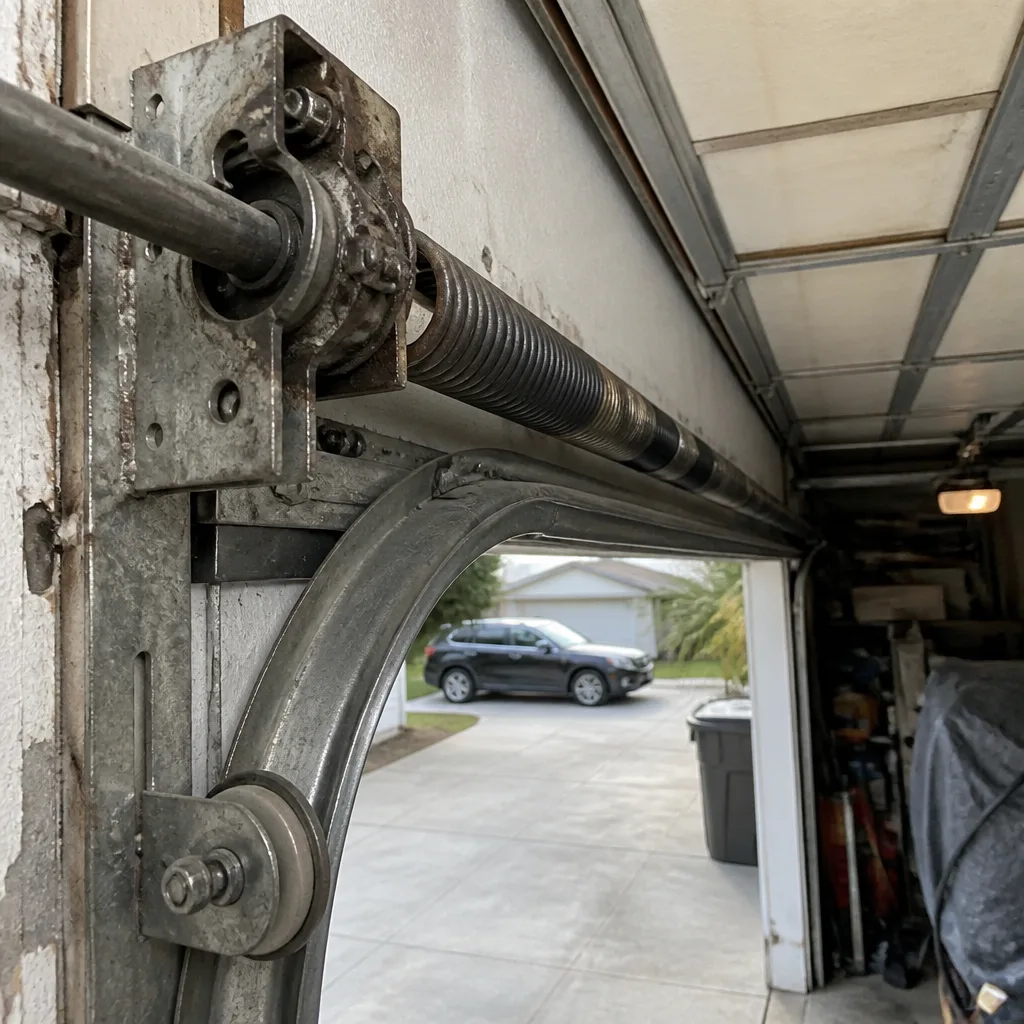
- Spring color and surface rust. Look at the torsion spring above the closed door without touching it. Light surface rust on the coils is cosmetic. Dark rust patches, flaking, or a visible crack in a coil are structural warnings. Springs fail by fatigue, not corrosion, but corrosion accelerates fatigue by eating into the coil’s cross-section.
- Bottom seal condition. The rubber strip along the bottom of the door should lie flat against the concrete with no visible gaps when the door is closed. A seal that’s curled up at one corner, cracked through its center, or visibly shrunken away from the door edge lets water, mice, and summer heat under the door.
- Hinge and bracket alignment. Each door section connects to the next with hinges. The hinge plates should sit flat against the door stiles with no daylight between the plate and the panel. A hinge that’s pulling away from the panel means the screws are stripping out of the wood or metal stile, and the hinge is carrying the panel’s entire weight instead of sharing it.
- Opener rail sag. The rail that runs from the opener motor to the door should be straight and level. A rail that sags in the middle puts a sideways pull on the door’s top panel, which can crack the panel and wears the opener gear prematurely.
Speed and Balance Signals: Reading Spring Tension and Sensor Alignment
The way the door moves tells you as much as the way it sounds. A properly balanced door opens smoothly, holds position anywhere you stop it, and closes at a consistent speed. When a door deviates from that, the deviation points at the specific component losing its adjustment.
A Door That Closes Faster on One Side
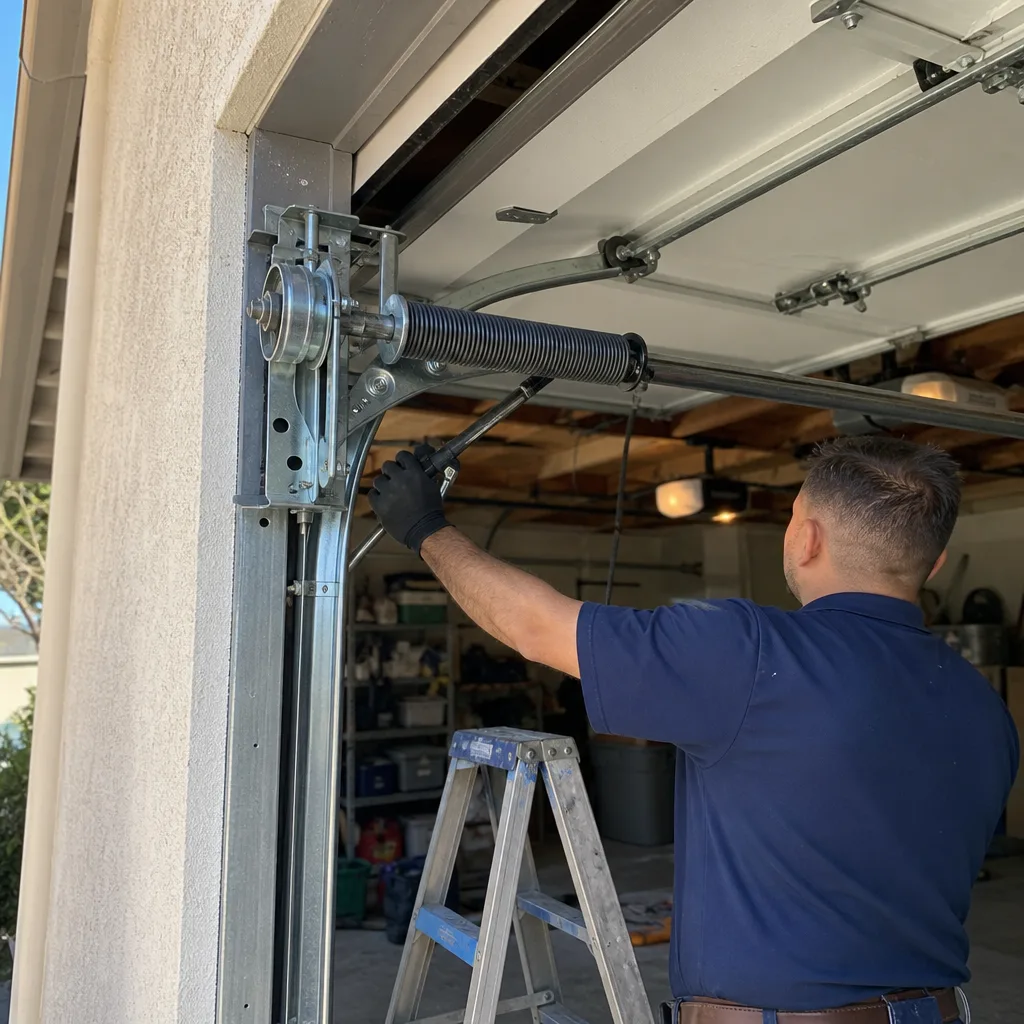
Uneven closing speed means one side of the door is doing more work than the other. The cause is almost always a tension imbalance in the torsion spring system or a cable that has slipped one groove on its drum. On a door with two torsion springs, one spring may be losing tension faster than the other, leaving the door to drop harder on the weak side. The visual confirmation is in the cables: look at the cable drums above the door while someone operates it. The cable should feed smoothly and evenly onto the drum. If one side wraps slower or looks loose, that’s the side losing tension. This is a spring repair issue, and it belongs in the hands of someone who does garage door spring repair in Orange County regularly. Attempting to re-tension a torsion spring without the correct winding bars is the fastest way to a serious hand or face injury.
A Door That Hesitates at the Midpoint
A hesitation at the halfway point, where the door pauses for half a second before continuing, is a balance problem. The door’s center of gravity shifts as it transitions from vertical to horizontal travel, and a properly tensioned spring system compensates for that shift smoothly. A door that hesitates is telling you the spring tension no longer matches the door’s weight distribution. Over time, a hesitation becomes a stall, and a stall mid-cycle can strip the opener gear or leave the door stranded halfway open. Most door manufacturers and spring suppliers recommend a balance check once a year, and it takes a technician about ten minutes.
A Door That Reverses Before It Closes
This is the most common call Fernbrook gets in Orange County, and it’s the most commonly misdiagnosed by homeowners. The door starts to close, travels a few inches to a foot, then reverses back up. It’s not being willful, and it’s usually not a broken opener. The three causes, in order of frequency:
- Safety sensor misalignment. The two sensors sit in the door tracks, about six inches off the floor, one on each side. They face each other across the opening. Their beam must hit the other sensor’s receiver dead center. A bump from a bike, a kicked ball, or a shovel leaning against the wall knocks a sensor a few degrees out of alignment. The gap in the beam is invisible, and the door reverses as a safety response.
- Debris breaking the sensor beam. A cobweb, a dangling extension cord, a rake handle, or even a single leaf attached to the sensor lens will break the beam. The sensor’s small LED light usually blinks or goes out, but not every homeowner has looked at that light in years.
- Travel limit drift. The opener’s internal limit setting tells it how far down it should travel before the motor stops. That setting drifts over time, especially on older openers, and the door picks up a false signal that it’s hit something before it’s actually reached the floor. Reset the limit to match the physical door position and the reversing stops.
All three of these are fixable without replacing the opener. The first two take five minutes and no tools. If the sensors are aligned and clean and the door still reverses, the limit has likely drifted and the opener’s manual explains the reset procedure for that specific model.
Stop Today vs. Monitor for 30 Days: A Plain-Language Classification
Every warning sign falls into one of two buckets: something that makes the door unsafe to operate today, or something that can be watched for a month while you line up a repair on your schedule. The difference matters because a family’s daily routine depends on the door. Here’s our honest classification, based on what we’ve seen behind the doors of Orange County homes.
Stop Using the Door Today
- Visible cable fraying at the bottom bracket. A frayed cable is a cable that will fail without further notice. When it fails, the door slams down on one side. If a car is halfway under it, the panel hits the roof. If a bicycle or a toolbox is under it, the door jams hard enough to bend a track or crack a panel.
- A visible crack in a torsion spring coil. A crack means the spring’s structure is compromised. The spring may hold for a week or it may snap the next time the door cycles. A snapping torsion spring releases all its stored torque at once and can throw debris, cut skin, or damage anything near the spring line.
- A door that jumps off its tracks or binds hard enough to stop midway. This means the track, roller, or panel alignment has failed in a way that will only get worse with each cycle. Forcing the door through the bind bends the track and multiplies the repair cost.
- A door that falls noticeably when the opener releases. If the door drops more than a few inches when you pull the release handle, the spring tension is not holding the door’s weight. The door is effectively a falling object held up by the opener, and the opener was never designed to carry that load alone.
Monitor for 30 Days
- Mild squealing that responds to lubrication. Lubricate the rollers and hinges. If the squeal lessens or disappears, the component still has life. If it comes back within a week, the component is due for replacement.
- Light surface rust on the torsion spring. Cosmetic rust doesn’t reduce a spring’s working life enough to justify replacement. Monitor it for darkening or flaking, which signals deeper corrosion.
- A door that vibrates slightly but still moves smoothly. Loose hardware produces vibration. Tighten the bolts you can reach with a wrench. If the vibration persists, a roller or hinge is wearing and you can schedule a repair rather than calling in an emergency.
- A bottom seal that’s beginning to curl at the corners. A curling seal loses effectiveness gradually. It’s worth replacing before winter rains, but a few weeks of summer won’t change the outcome.
The reasoning behind this split: anything that can fail catastrophically and drop the door’s weight onto a person, pet, car, or floor belongs in the stop-today category. Everything else is a component degrading on a timeline that allows for a scheduled repair. When in doubt, stop using the door and call. The cost of a service call is less than the cost of a door-shaped hole in a car roof.
How Orange County’s Climate Creates Warning Signs You Won’t Read About Elsewhere
Generic garage door guides, the ones written for national audiences, miss the specific wear patterns of coastal Southern California. Orange County’s combination of intense sun, salt air within five miles of the coast, and temperature swings between inland valleys and the beach cities produces failure modes that a Minnesota guide will never show you. Here are the three climate-specific warning signs we see most often.
Sun-Bleached Nylon Rollers That Crack Silently
West-facing and south-facing doors in Orange County bake in direct afternoon sun for six months a year. The door panels themselves weather; more importantly, the nylon rollers inside the tracks sit in that heat all day. Nylon degrades under UV exposure and repeated thermal cycling. The rollers bleach from white to chalky yellow, then develop hairline cracks on the wheel face, and then one day a crack propagates through the entire wheel and the roller splits in half. The crack happens silently, with no warning sound, because the roller is not under load when the door is stationary. If your door faces south or west, check the roller color during your seven-point inspection. A chalky, yellowed roller is due for replacement even if it still spins.
Salt-Pitted Torsion Bar Ends Near the Coast
The torsion bar is the steel shaft that runs through the springs above the door. Its ends protrude through the end bearing plates, and in coastal cities like Laguna Beach, Dana Point, and Seal Beach, those exposed ends catch salt-laden fog and ocean air. The bar ends develop pitting, a form of corrosion that eats small craters into the steel. A pitted bar end still functions, but the pitting accelerates the wear on the bearing it rides in, and the bearing failure then produces a grinding sound at the top of the door on every cycle. Homeowners three miles inland in Irvine or Lake Forest rarely see this pattern. It’s specific to the salt belt along the Pacific Coast Highway corridor.
Heat-Expanded Bottom Seals That Drag on Summer Mornings
Rubber bottom seals expand when they get hot. In Orange County’s inland areas, like Orange, Villa Park, and Anaheim, summer afternoon temperatures regularly reach 95 degrees or higher. A seal that fits correctly in the morning will expand by late afternoon and begin to drag on the concrete threshold when the door opens. The drag produces a rubber-on-concrete squeal or a slight stutter in the door’s initial movement. Homeowners sometimes mistake this for a spring problem, because the door moves sluggishly. The fix is usually just the seal, replaced with a material rated for the temperature range, and the sluggishness clears up immediately. If your door struggles first thing in the morning or late in the evening but works normally at midday, the seal is expanding and contracting with the heat, not the springs failing.
Adjustments You Can Safely Make in Five Minutes (No Tools Required)
Some warning signs respond to adjustments a careful homeowner can make without touching anything under tension or anything electrical. Here is what’s safe, in order of what we recommend trying first.
- Clean the safety sensor lenses. Use a dry cloth or paper towel. Wipe the lens surface on both sensors, the one on each side of the door opening. Dirt, spider webs, and water spots break the beam even when the sensors are perfectly aligned. Cleaning the lenses resolves the reversing problem in more than half the cases we see.
- Realign the safety sensors. Most sensor brackets have a small wingnut that lets you adjust the angle. Loosen it just enough to move the sensor, then point the sensor at the other one across the opening. When the alignment is correct, both sensors show a steady light (usually green or amber depending on the brand). Tighten the wingnut. If the door still reverses after both sensors show steady lights, the problem is elsewhere.
- Clear the sensor beam path. Look for anything between the two sensors that could break the beam, even partially. A shovel handle leaning against the wall at beam height, a coiled extension cord, a bicycle tire, a trash can. Move whatever is in the path and test the door again.
- Lubricate moving parts with a garage door-specific lubricant. Use a spray lubricant made for garage doors, not WD-40. Spray the rollers, hinges, and the bearing plates at the ends of the torsion bar. The lubricant quiets most squeals within a day. If the squeal returns within a week, the rollers or bearings are past lubricating and need replacement.
- Tighten loose bolts you can reach with a wrench or socket. The bolts holding the track brackets to the wall and ceiling are reachable with a standard ladder. Tighten any that are visibly loose. Do not loosen and retighten anything under spring tension, and do not touch the red bolts at the ends of the torsion springs; those are under load and can cause injury if adjusted without the correct tools and training.
These five steps account for most quick fixes that resolve a reversing door, a squealing door, or a rattling door without any part replacement. Anything beyond these steps belongs in a service call with someone who handles garage door installation in Orange County and repair work daily, and who can look at the whole system rather than one symptom.
When to Call a Professional
Call a professional when the warning sign involves a torsion spring under tension, a lift cable showing fray, a door that has jumped its track, or any repair that requires reaching above the door while it’s under load. These are the jobs where a mistake costs more than the repair would have. A spring that snaps while being adjusted without winding bars can break a hand. A cable that slips while being replaced can whip back and cut. The tension in a garage door spring is not comparable to anything else most homeowners ever work around.
The good part: a professional eye catches what a visual inspection misses, and the good companies document what they find. Fernbrook Garage Doors Orange County offers free estimates across Orange County, with a written price presented before any work begins. Call (831) 318-5791 and a live person answers.
See the difference
 Before
 After
After Before
 After
After Before
 After
AfterCommon Mistakes to Avoid
- Ignoring a reversing door because it “still works eventually.” A door that reverses and then closes on the second try is telling you the safety system is compromised or the limit is drifting. Ignoring it doesn’t save money; it builds toward a day when the door reverses and doesn’t close at all, usually when you’re already late.
- Lubricating a spring that’s already cracked. Lubricant quiets the noise but doesn’t repair the crack. A cracked spring is a replacement, not a lubrication problem. Relubricating it just masks the warning sign until the spring breaks.
- Disconnecting the opener and forcing the door manually. If the door won’t move under opener power and won’t move smoothly by hand, the spring system is not assisting. Forcing the door through the resistance bends tracks and cracks panels, and it teaches you nothing about the actual problem.
- Replacing only the spring that broke. Doors with two torsion springs should have both replaced together. The surviving spring has the same number of cycles on it as the broken one, and a mismatched pair leaves the door imbalanced from the day of the repair.
- Using household lubricants on nylon rollers. WD-40 and similar products break down nylon and attract dust. The right lubricant is labeled for garage doors and leaves a thin dry film, not a wet coat.
- Ignoring a scraping sound because it’s intermittent. In Orange County’s coastal cities especially, an intermittent scrape is often a corroded roller or hinge that binds in humid weather and releases when dry. It’s not random; it’s moisture-dependent, and it gets worse over time.
- Measuring the track gap from the driveway only. Most track misalignment shows up on the inside upper curve of the horizontal track, which you can’t see from the driveway. The seven-point circuit only works if you do the inside portion.
Frequently Asked Questions
Most garage door repairs in Orange County fall between $150 and $450, depending on the part and the labor involved. Roller replacement typically runs $120 to $180, sensor realignment or cleaning $75 to $120, spring replacement $250 to $450 for a pair, and cable replacement $150 to $250. Garage door spring repair in Orange County is the most common repair we quote, and the range reflects whether the door has one spring or two. Call (831) 318-5791 for an exact quote, and Fernbrook presents it in writing before any work starts.
The three causes in order of frequency are misaligned safety sensors, debris breaking the sensor beam, or a drifted travel limit. In Orange County’s older homes, especially those with original openers more than ten years old, the travel limit drift is more common than in newer homes because the opener’s internal potentiometer wears out slowly. Start by cleaning the sensor lenses and clearing the path between them, then check for a steady light on both sensors. If the door still reverses, the limit has likely drifted and the opener manual explains the reset.
Standard torsion springs are rated for 10,000 cycles, which translates to roughly 7 to 9 years for a typical Orange County household that cycles the door four times a day. Coastal homes see slightly shorter spring life because salt air accelerates surface corrosion, which in turn accelerates fatigue. If your springs are original to a house built before 2018 and you use the door daily, they’re likely near the end of their rated life even if they’re not visibly cracked.
No. Torsion springs are under 150 to 250 pounds of stored torque, and replacing one requires winding bars that match the spring’s cone, plus experience reading the spring’s orientation and wire size. The correct tools cost more than a service call, and a mistake during winding releases all that torque at once. This is the one garage door repair where we don’t describe the procedure. Hire someone trained on spring systems, and confirm they carry the right bars for your spring size.
A normal door is steady and consistent, with a low hum from the opener and a soft roll from the wheels. Warning sounds are intermittent (a pop, a grind, a scrape) or they increase over time. A door that makes the same sound it’s made for five years is probably fine. A door that makes a new sound, or a sound that’s getting louder week over week, is communicating wear. The seven-point inspection catches most visual wear before the sound even starts.
Yes. Fernbrook covers all of Orange County, from Seal Beach and Huntington Beach through Irvine, Tustin, Orange, Anaheim, and down to San Clemente. Regardless of which neighborhood you’re in, a live person answers the phone 24 hours a day at (831) 318-5791, and the technician who arrives is background-checked and uniformed. The written price is provided before work begins, every visit.
A full garage door replacement in Orange County, including installation, runs from $1,100 to $3,800 depending on size, material, insulation rating, and whether you’re replacing the opener at the same time. For a full breakdown and a written quote based on your door’s measurements, contact garage door installation in Orange County services. Fernbrook trains its technicians on eight major brands including LiftMaster, Chamberlain, Clopay, Amarr, Raynor, and Craftsman, so the quote reflects the door that fits your home rather than whatever’s in stock.
The Bottom Line
A garage door is a machine with a finite number of moving parts, and every one of them talks before it fails. The sounds map to specific components. The visual inspection catches wear without touching anything. The movement irregularities point at spring tension and sensor alignment. Orange County’s climate accelerates roller and spring wear in patterns you won’t find in a generic guide, but the fixes are the same: watch the door, act on the signals, and when the signal involves tension, cables, or tracks under load, hand it to someone who does this every day. Fernbrook’s technicians are trained on Craftsman, Raynor, LiftMaster, Chamberlain, and four other major brands. The door tells you what it needs. You just have to know how to listen.
Written by Jesse Calder, Owner at Fernbrook Garage Doors Orange County, serving Orange County since 2002.