
Last updated October 17, 2026
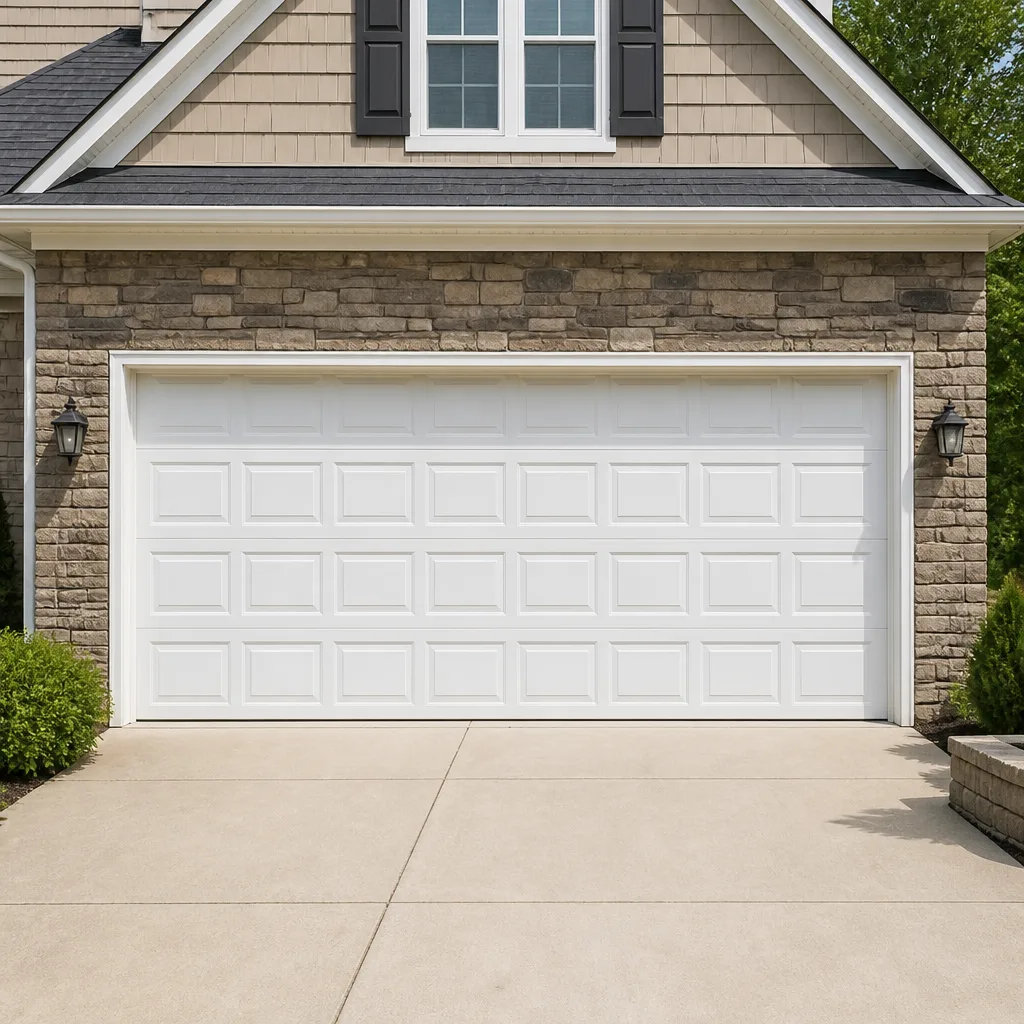 Raised-panel steel
 Carriage house
 Modern flush
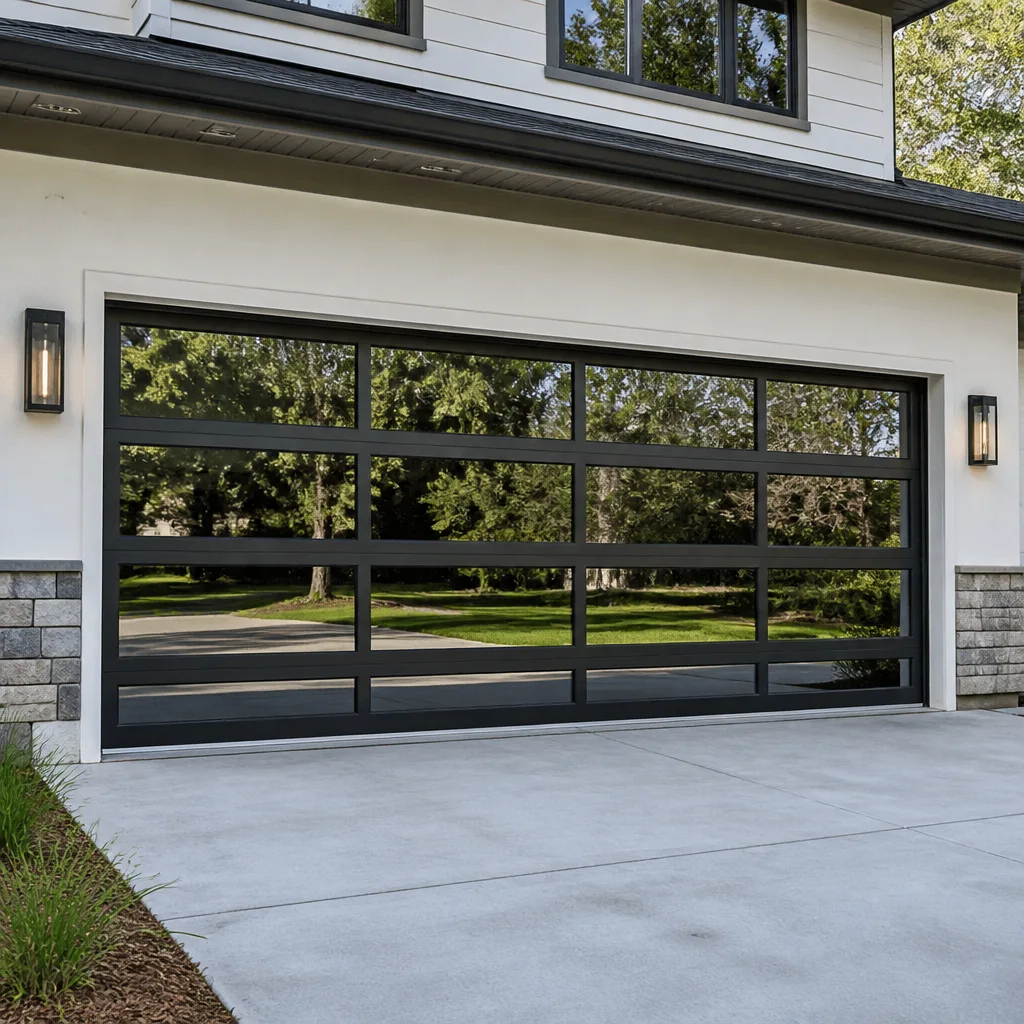 Full-view glass
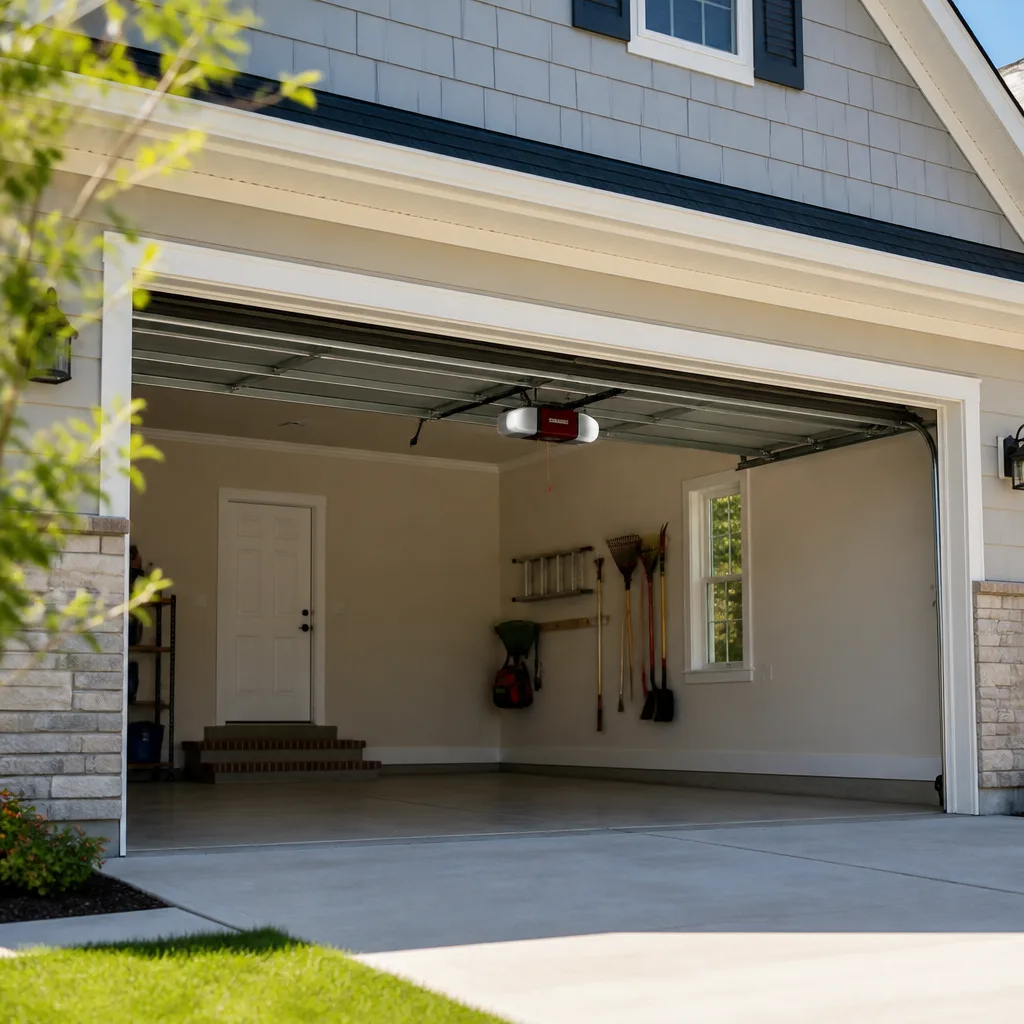 LiftMaster openers
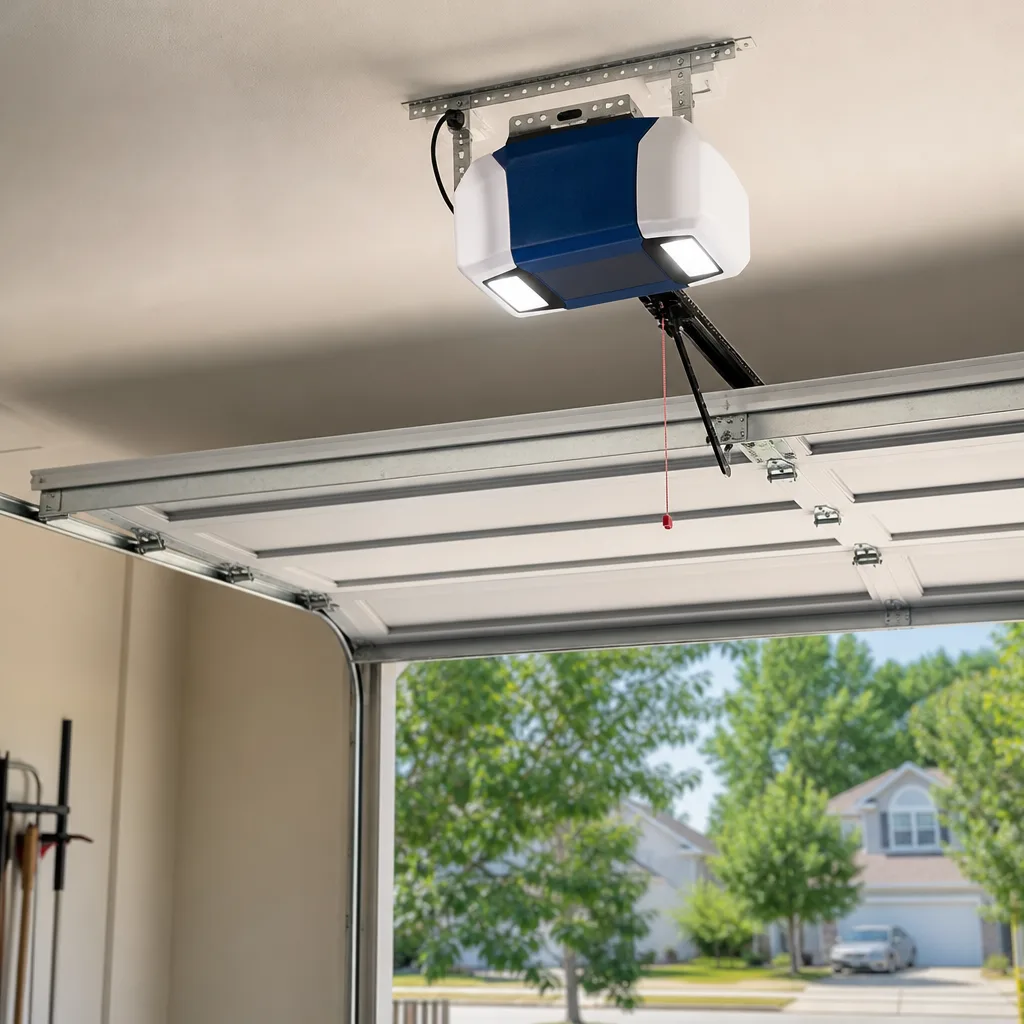 Chamberlain openers
Full 25-point door and opener safety check with every visit - springs, cables, rollers, tracks, and your LiftMaster or Chamberlain opener included
You get a price before we start. It does not change when the truck arrives.
Get your free estimateHow to Hire a Garage Door Contractor in Orange County: A Step-by-Step Guide
California’s Contractors State License Board lookup takes about 45 seconds. Fewer than one in five homeowners actually runs it before a contractor steps into their garage, where the panel box, the interior door into the house, and the utility connections all sit within arm’s reach. Hiring a garage door contractor in Orange County is less about comparing bids and more about knowing which three questions to ask before anyone opens a toolbox. By the end of this guide, you’ll know exactly how to verify a license, read an estimate, interpret reviews, and run a five-question phone script that separates companies that protect your home from companies that just make the door go up and down. For more guides & resources, visit our blog.
Quick Answer
To hire a garage door contractor in Orange County, verify their California CSLB license under classification C-61/D28, ask for a written itemized price before any work begins, and confirm their in-home practices (shoe covers, drop cloths, clean-up standards) in writing. Then call and ask five specific questions about pricing, parts, and clean-up. A licensed contractor with a written-price policy and a clear answer for how they protect your floors is worth more than a lower bid from someone who hedges on any of those points.
Styles & brands we work with
Table of Contents
- Step 1: Verify the CSLB License (and Know What Class C-61/D28 Means)
- Step 2: Require a Written Itemized Estimate, Not a Verbal Quote
- Step 3: Ask What Actually Happens Inside Your Home During the Job
- Step 4: Read Reviews Like an Auditor, Not a Consumer
- Step 5: The Five-Question Phone Script
- Step 6: Confirm Brand Training and Parts Compatibility
- Step 7: Orange County-Specific Considerations
- Common Mistakes to Avoid
- When to Call a Professional
- Frequently Asked Questions
Step 1: Verify the CSLB License (and Know What Class C-61/D28 Means)
Every legitimate garage door contractor in Orange County carries a California Contractors State License Board (CSLB) license. The specific classification for garage door work is C-61/D28: a specialty contractor license limited to doors, gates, and activating devices. When someone offers garage door repair in Orange County, this is the license you should see. A general building license (Class B) is not the right fit for a door specialist, and a handyman registration is not a contractor license at all. If a company only carries a handyman registration, they are legally limited to jobs under $500 including labor and materials, and they cannot pull permits or carry the same bonding requirements. That matters when a spring under tension is involved.
Run the check yourself at the CSLB website. Type in the business name and confirm the classification. If the company hesitates to give you their license number, that’s the end of the conversation. This is not a formality; it’s the first signal that the company operates within a structure that protects you if something goes wrong.
What to Verify in Under One Minute
- Ask for the CSLB license number on the phone or find it on their website.
- Look it up at cslb.ca.gov and confirm the name matches the company.
- Check that the classification is C-61/D28 (doors, gates, activating devices).
- Note any pending complaints or active suspensions. A suspended license means work stops mid-job if you get inspected.
- Confirm the license is active, not just issued. Some companies let a license lapse and keep operating.
In Orange County specifically, where many garage doors are attached to the house and share a wall with bedrooms, the stakes of unlicensed work are higher than a detached workshop might suggest. A botched spring repair can send a cable through drywall, and an unlicensed operator has no bond behind them to make that right.
Step 2: Require a Written Itemized Estimate, Not a Verbal Quote
A verbal quote is a number said out loud. An itemized estimate is a document. The difference is not the paper; it’s the specificity. An itemized estimate lists parts, labor, and a description of the work. When a contractor offers a verbal number and nothing else, the gap between that number and the final invoice often appears after the job is done. “That was just the spring. The cables needed replacing too.”
Ask for the price in writing before the technician touches the door. This is not an unreasonable request. A reputable garage door contractor in Orange County will put the number on paper and hand it to you before any work starts. At Fernbrook Garage Doors Orange County home, a written price is delivered before any work begins on every visit, no exceptions, and it is quoted and agreed before the first tool comes out of the truck. If a company pushes back on a written price, treat that as the signal it is.
What a Real Written Estimate Includes
- Line items for each part: spring, cable, roller, opener motor, track section.
- Labor as a separate line, not bundled into an opaque total.
- A note on whether the price includes cleanup and disposal of old parts.
- The total in plain dollars, with a signature line or acknowledgment.
- Warranty terms in writing: how long, what’s covered, what voids it.
Verbal quotes are not always dishonest, but they are always ambiguous. Written estimates remove the ambiguity. In our experience serving Orange County homes, the families who ask for a written price are the ones who never call us back about a surprise invoice, because the invoice matched the estimate.
Step 3: Ask What Actually Happens Inside Your Home During the Job
A garage is not a detached workshop for most Orange County families. It is the passage between the car and the kitchen, and for many homes it connects to a laundry room or a hallway with hardwood that cost more than the garage door repair itself. The question is not whether a contractor “cares about quality” in the abstract. The question is what they will physically do to protect your floors, your walls, and the items you store in the garage.
Ask a direct question: “When your technician works inside the garage, do they wear shoe covers?” Then ask about drop cloths, and about whether they ask before moving anything. These are not fussy questions. They are the fastest way to learn whether a company has operating standards or just a marketing page. A contractor who has never been asked about shoe covers will hesitate. A contractor who runs a structured operation will answer without thinking: “Yes, shoe covers on hardwood, drop cloths on tile, and we ask before we move anything.”
What to Ask About In-Home Practices
- Do technicians wear shoe covers inside the garage and any connecting interior space?
- Do you lay drop cloths under the work area to catch grease, metal shavings, and old spring debris?
- Do your technicians ask before moving a dog crate, a stroller, or anything else stored in the garage?
- Is there a photo or walk-through of the cleanup before the technician leaves?
- Are the products used safe around pets? Some lubricants are not something you want a dog sniffing.
At Fernbrook Garage Doors, the Cedarwell Care Promise is an enumerable checklist, not an abstract ideal: shoe covers on every floor, drop cloths on tile, quiet tools during nap time, pet-safe products where there is a choice, and a photo of the clean-up before the technician walks out. Background-checked, uniformed technicians follow the C.A.R.E. values: Clean up like it is our own home; Ask before we move or touch anything; Respect the family’s time and quiet hours; Explain the price before the work. When a company can list its standards the way we just did, you know they are operational. When it cannot, the standards probably do not exist.
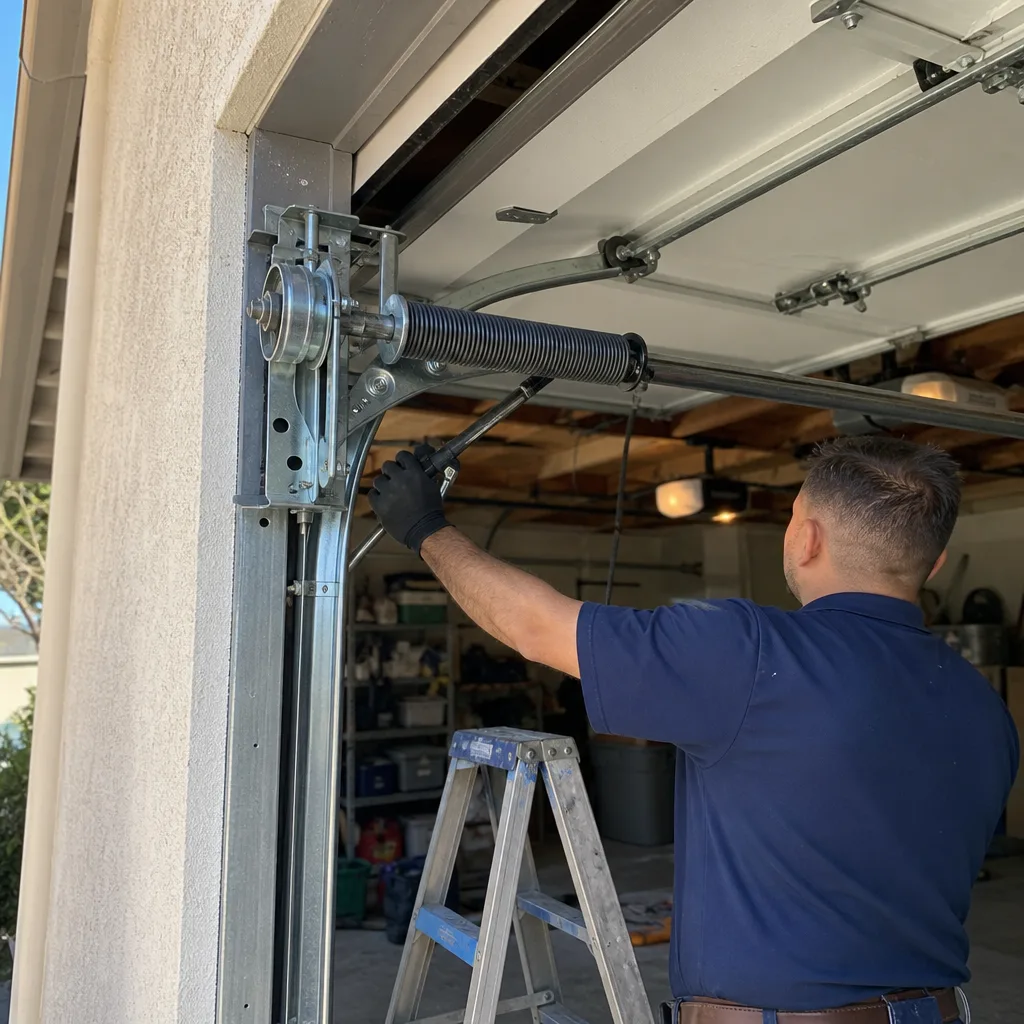
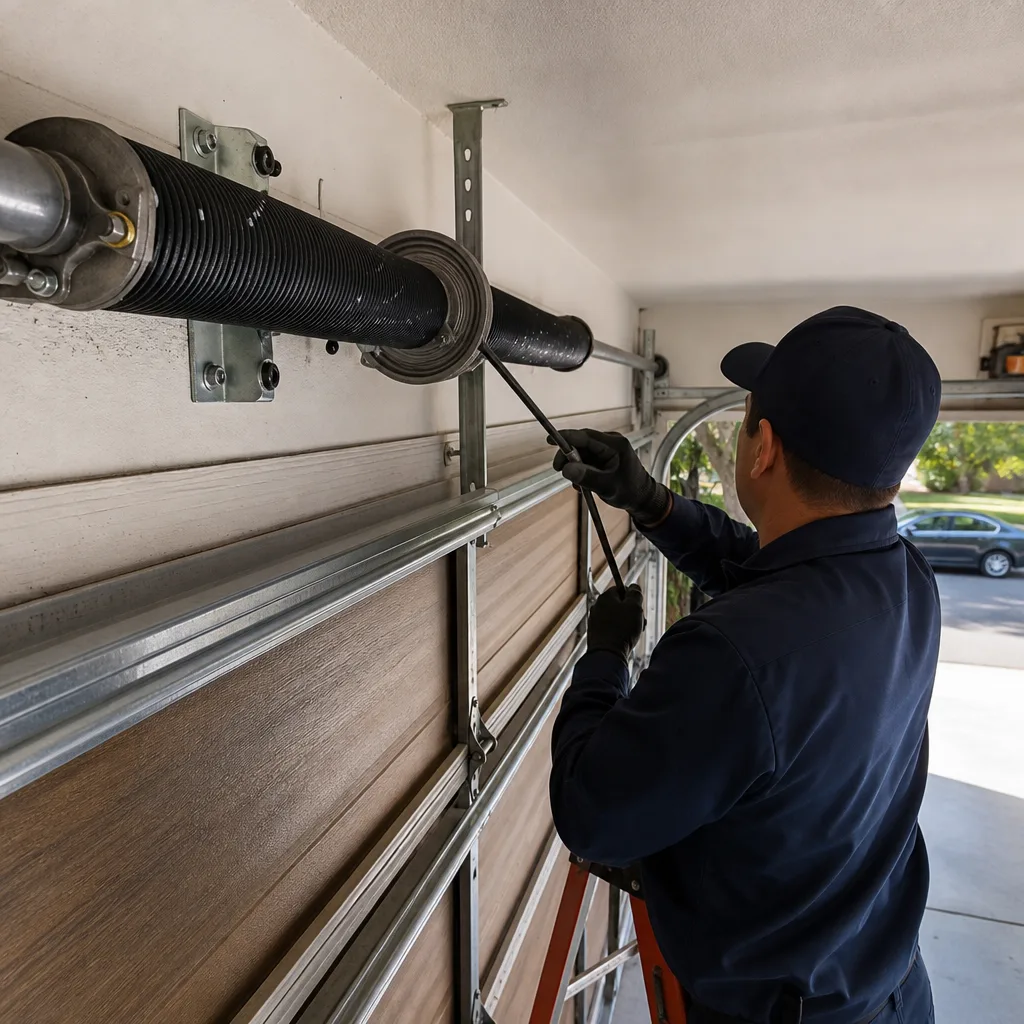
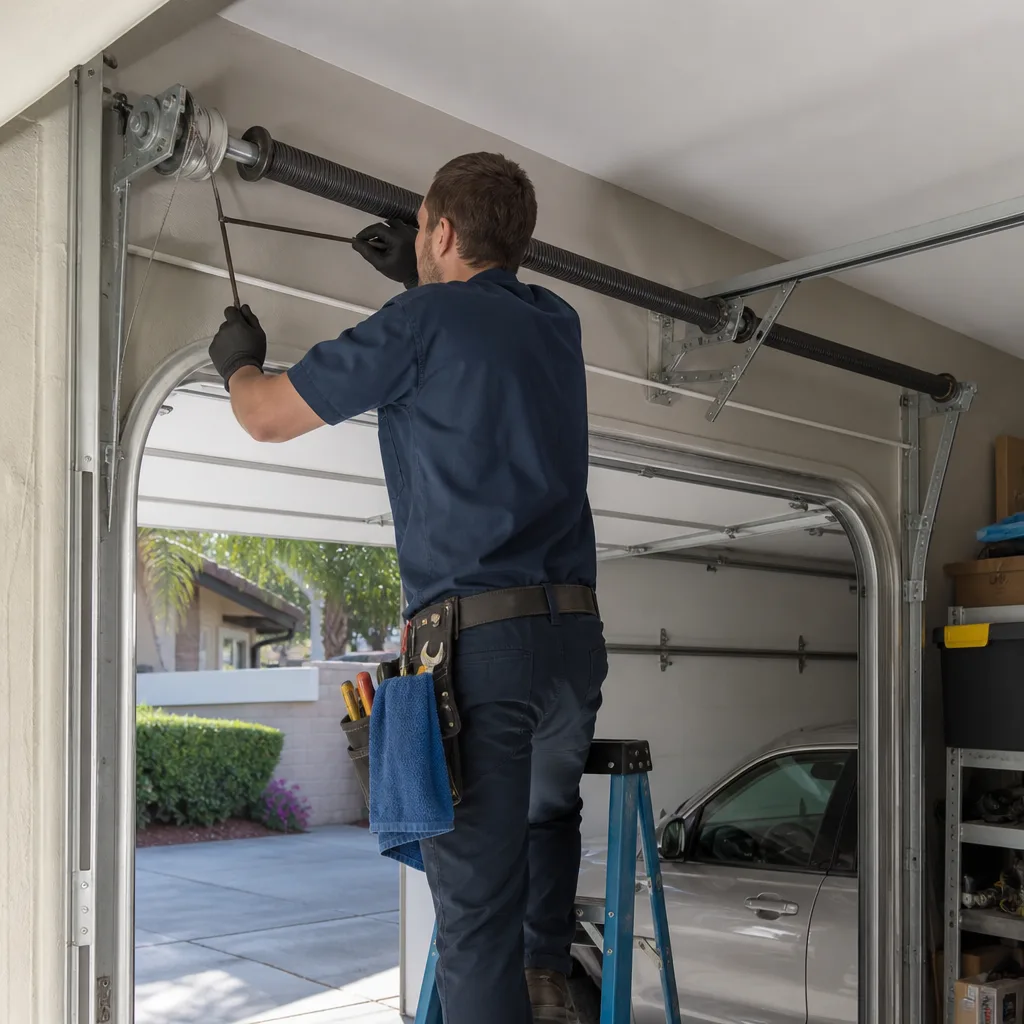
A note on safety: garage door springs are under extreme tension, and cables run through pulleys that can cut. This is not the place for a handyman with a generic toolkit. When you hire a contractor who can describe their operating standards in specifics, you are also hiring someone who has thought through the risk of a spring coming loose in a garage where your kids’ bikes are parked six feet away.
Step 4: Read Reviews Like an Auditor, Not a Consumer
Most people read reviews to answer one question: “Was this company okay?” That is the wrong question. Reviews are more useful when you read them for signals about workmanship, clean-up, and pricing behavior, not just speed. A review that says “fast and affordable” tells you nothing about whether the door was balanced after the spring replacement, whether the opener safety sensors were tested, or whether the technician left grease on the wall. The reviews that matter are the ones where the reviewer noticed something specific.
When you scan reviews for a garage door contractor in Orange County, look for these phrases as positive signals: “cleaned up before he left,” “showed me the price in writing before starting,” “asked before moving our stuff,” “explained what he was doing.” These are workmanship and process markers. Phrases like “quick” and “cheap” can be neutral or even negative, because a rush job on a spring replacement can leave the door slightly out of balance, which shortens the life of the opener and the new spring.
Also look at the review distribution. A company with many five-star reviews and a handful of one-star reviews is normal. A company with only five-star reviews and no detail in any of them may be buying reviews or filtering out criticism. Read the middle ratings, if any exist, because those often contain the most specific observations.
Step 5: The Five-Question Phone Script
The phone call is where you learn whether a company prices before or after they see the job. Ask these five questions in order. A good contractor will answer each one without hesitation. A bad one will hedge, redirect, or get vague.
The Script
- “What is your CSLB license number?” A direct answer means you can verify. A stall means you should end the call.
- “Do you provide a written price before any work starts?” The only acceptable answer is yes. Listen for the word “written.”
- “What do your technicians do to protect the floors and the items in the garage?” Listen for specifics: shoe covers, drop cloths, a clean-up process.
- “What brands do your technicians train on?” A garage door company that trains on specific brands like LiftMaster, Chamberlain, Genie, and Clopay can diagnose faster and carry the right parts. A company that says “all brands” without naming any probably trains on YouTube.
- “How long is your work guaranteed?” A real answer is a number of days or years. A vague answer is a red flag. Our work at Fernbrook Garage Doors is backed by the 365-Day Done Right Promise: if it is not done right, we make it right, stamped on every job, no negotiation required.
These five questions take less than two minutes on the phone. They reveal more than an hour of reading a website, because they force the person on the other end to describe their operating standards in real time.
Step 6: Confirm Brand Training and Parts Compatibility
Garage door brands are not interchangeable. A LiftMaster opener uses a different logic board than a Genie, and a Clopay door uses different balance parameters than an Amarr. When a contractor says they “work on all brands,” the follow-up question is: which brands are your technicians actually trained on, and do you stock parts for them?
A company with training on specific brands will answer with a list: LiftMaster, Chamberlain, Genie, Clopay, Amarr, Wayne Dalton, Craftsman, Raynor. A company without formal training will answer with a shrug. The difference matters for two reasons. First, a trained technician can diagnose a Chamberlain opener’s two-click error code without a thirty-minute trial-and-error session on your clock. Second, a company that stocks parts for specific brands can finish most repairs in one visit, while a company that orders everything ad hoc will leave your door half-fixed overnight.
Ask which brands the technician on your job will be trained on, and ask whether they carry springs, cables, and opener parts on the truck. A truck stocked with common parts is the difference between a one-visit repair and a four-day saga with your car stuck in the garage.
At Fernbrook, our technicians are trained on eight major brands: LiftMaster, Chamberlain, Genie, Clopay, Amarr, Wayne Dalton, Craftsman, and Raynor. That breadth of training means we can match most opener or door configurations without a callback.
Step 7: Orange County-Specific Considerations
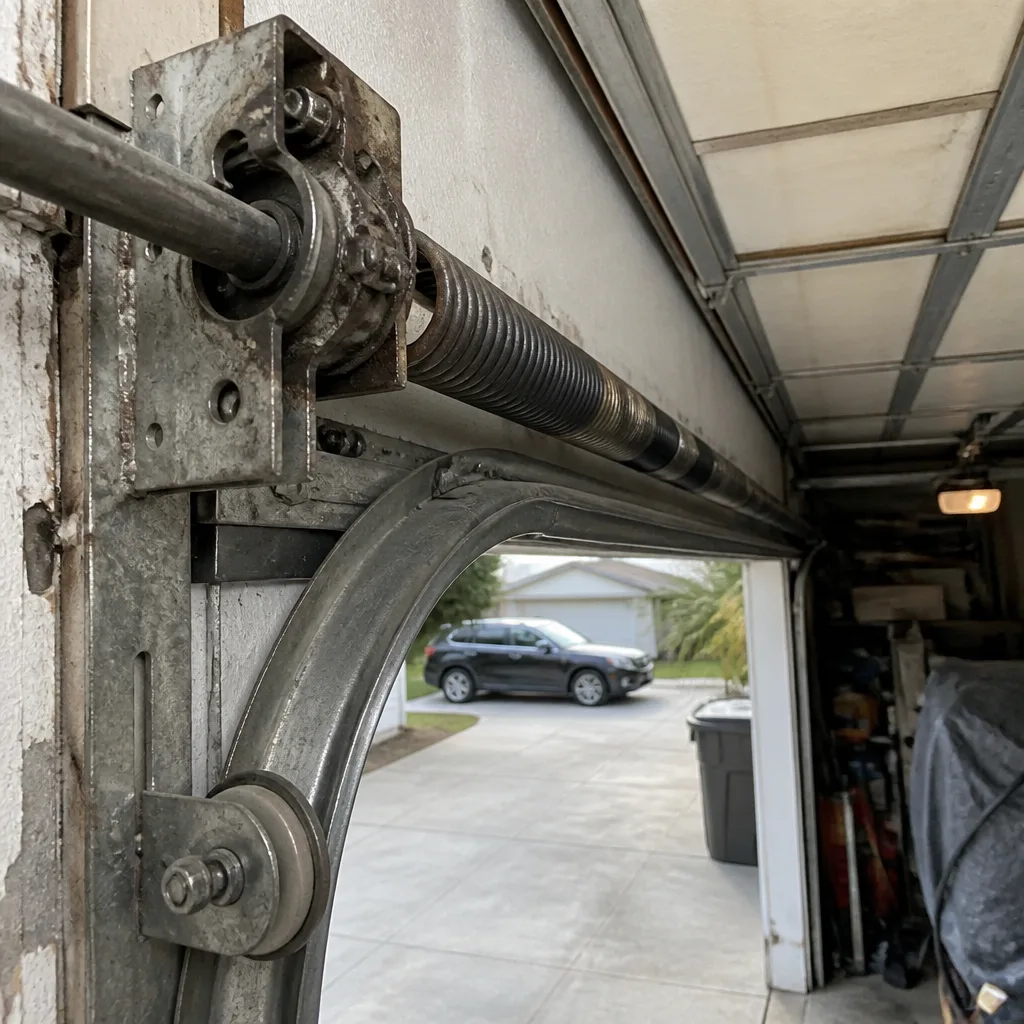
Orange County’s coastal climate affects garage doors in ways other regions do not. Salt air near Huntington Beach, Newport Beach, and Laguna Beach accelerates rust on springs, cables, and roller brackets. Doors within a few miles of the coast often show spring corrosion years before inland doors in Irvine, Mission Viejo, or Anaheim Hills would. If you live near the coast and a door part fails, expect the technician to check the entire system for salt damage, not just the broken part. A coastal spring replacement should include a look at the cables and roller brackets, because what rusts one component usually touches its neighbors.
Inland Orange County brings a different profile: summer heat in cities like Yorba Linda, Fullerton, and Orange can dry out roller bearings and stretch opener belts. The swing between cool coastal mornings and hot inland afternoons also causes doors to expand and contract slightly, which can throw off balance over time. A contractor working in both zones will know to ask about your microclimate, not just your door brand.
Permit requirements in Orange County for garage door work are minimal: most repair and replacement jobs do not require a permit, but certain structural modifications, such as widening an opening or changing a load-bearing header, do. Your contractor should know the difference and tell you plainly. If they suggest that “no permit is ever needed,” they are wrong. If they insist on a permit for a standard spring replacement, they are padding the bill.
For more context on garage door work in this area, read our full breakdown on Garage Door Repair in Orange County.
Common Mistakes to Avoid
- Hiring on price alone. The lowest bid on a spring replacement in Orange County often means a generic spring, no written estimate, and no warranty. You pay the difference when the door fails again in nine months.
- Not checking the license classification. A general contractor license is not a garage door specialty license. Confirm C-61/D28 before the first visit.
- Accepting a verbal quote. If the price is not written and itemized, you have no record of what was agreed when the invoice arrives.
- Believing “fast and affordable” reviews. Speed and low price are not workmanship metrics. Look for reviews that describe clean-up, written pricing, and balanced doors.
- Asking only about the door. The technician’s in-home practices matter as much as their mechanical skill. Ask about shoe covers and drop cloths before the job, not after your floor is scuffed.
- Skipping the warranty question. A company that cannot state its warranty in plain days or years is not standing behind its work.
- Ignoring coastal rust. If you live within a few miles of the coast and your spring snapped, the cables probably need a look too. Hire someone who checks the system, not just the broken part.
When to Call a Professional
Call a professional when the door makes a sound it never made before, when it moves unevenly, when it opens slower than it used to, or when the spring is visibly broken. Do not attempt to replace a torsion spring yourself. The spring holds enough tension to cause serious injury, and the tools required are specific to the job. If the door will not open at all and your car is trapped, call a company that answers the phone live, any hour. Fernbrook Garage Doors Orange County answers calls with a live person 24 hours a day, 7 days a week, no voicemail trees and no next-day callbacks. Call (831) 318-5791 for a free estimate on Garage Door Spring Repair in Orange County.
Frequently Asked Questions
Ask for the CSLB license number and look it up at cslb.ca.gov. Confirm that the classification is C-61/D28, which is the specialty license for doors, gates, and activating devices, and check that the license is active with no suspensions.
Spring repair in Orange County typically ranges from $180 to $340, opener replacement from $350 to $650, and a full cable and roller replacement from $150 to $300, with coastal homes often on the higher end of each range due to salt corrosion. Call (831) 318-5791 for a written itemized quote before any work starts.
Not at Fernbrook Garage Doors Orange County. A written price is delivered before any work begins on every visit, quoted and agreed before the first tool comes out of the truck. That is the Cedarwell Care Promise, and it is not negotiable.
Most garage door repairs happen entirely in the garage, but if the interior door connects to the house or the opener motor requires access through the attic or a wall switch, the technician may step inside briefly. Ask about shoe covers and drop cloths before the visit.
Yes. Salt air near the coast accelerates rust on springs, cables, and roller brackets. A good contractor checks the entire system for corrosion when one part fails, especially in coastal cities like Huntington Beach, Newport Beach, and Laguna Beach.
No. Torsion springs hold extreme tension and can cause serious injury if mishandled. The work requires specific winding tools and an understanding of door balance. Hire a trained professional with a C-61/D28 license who carries the correct parts on the truck.
If you are considering a Garage Door Installation in Orange County, the same principles apply: verify the license, require a written price, and confirm in-home practices before scheduling.
The Bottom Line
Hiring a garage door contractor in Orange County comes down to three questions asked before anyone opens a toolbox: what is your CSLB license number, do you provide a written price before work begins, and how do your technicians protect the floors and the things I keep in my garage. For a deeper look at everything involved, see The Complete Guide to Garage Door in Orange County. A licensed C-61/D28 contractor who answers those questions directly, keeps parts on the truck, and guarantees the work in writing is worth more than a lower bid from someone who hedges on any of them. The door opening again is the minimum. The floors staying clean, the price matching the estimate, and the work being guaranteed for a year are what separate a contractor from a company you can call again next time. Fernbrook Garage Doors Orange County offers free estimates across Orange County, including coastal and inland areas. Call (831) 318-5791 for a written quote with no obligation.
Written by Jesse Calder, Owner at Fernbrook Garage Doors Orange County, serving Orange County since 2002.
See the difference
 Before
 After
After Before
 After
After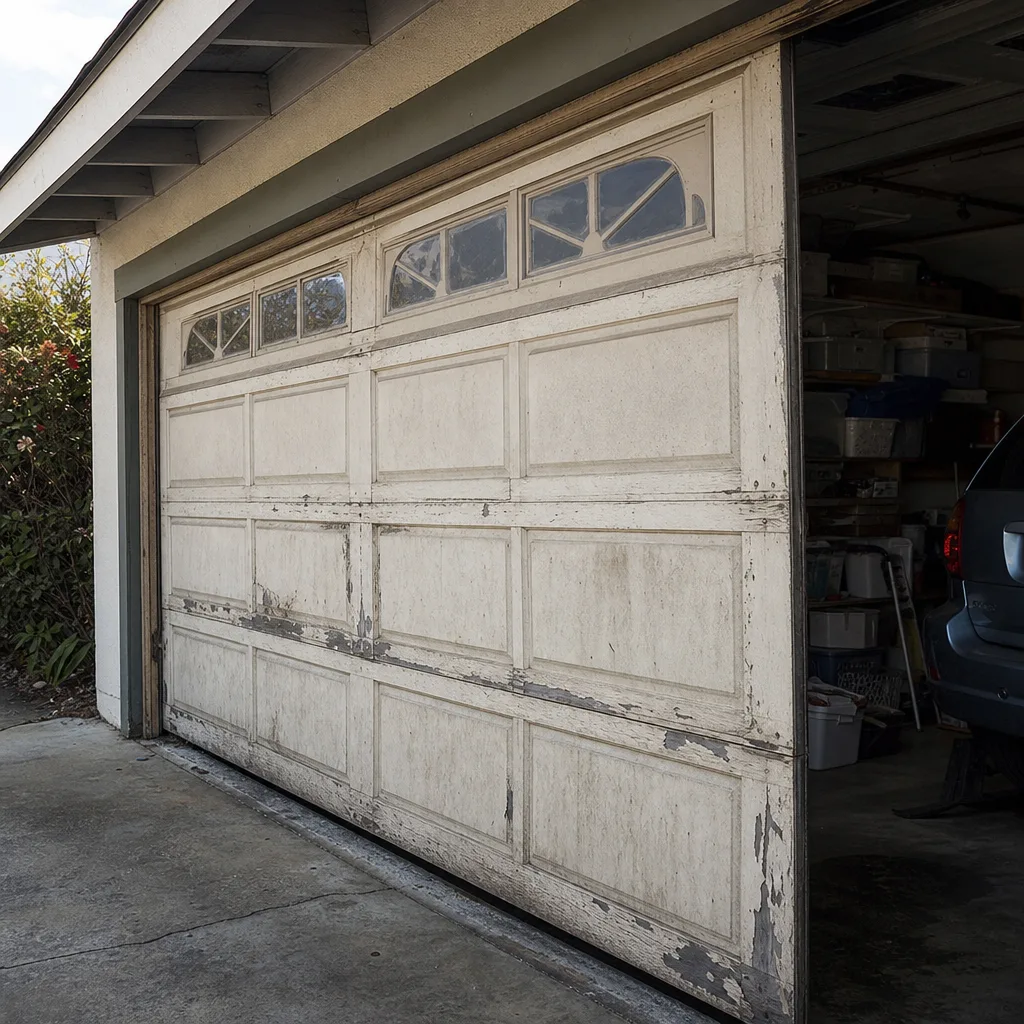 Before
 After
After